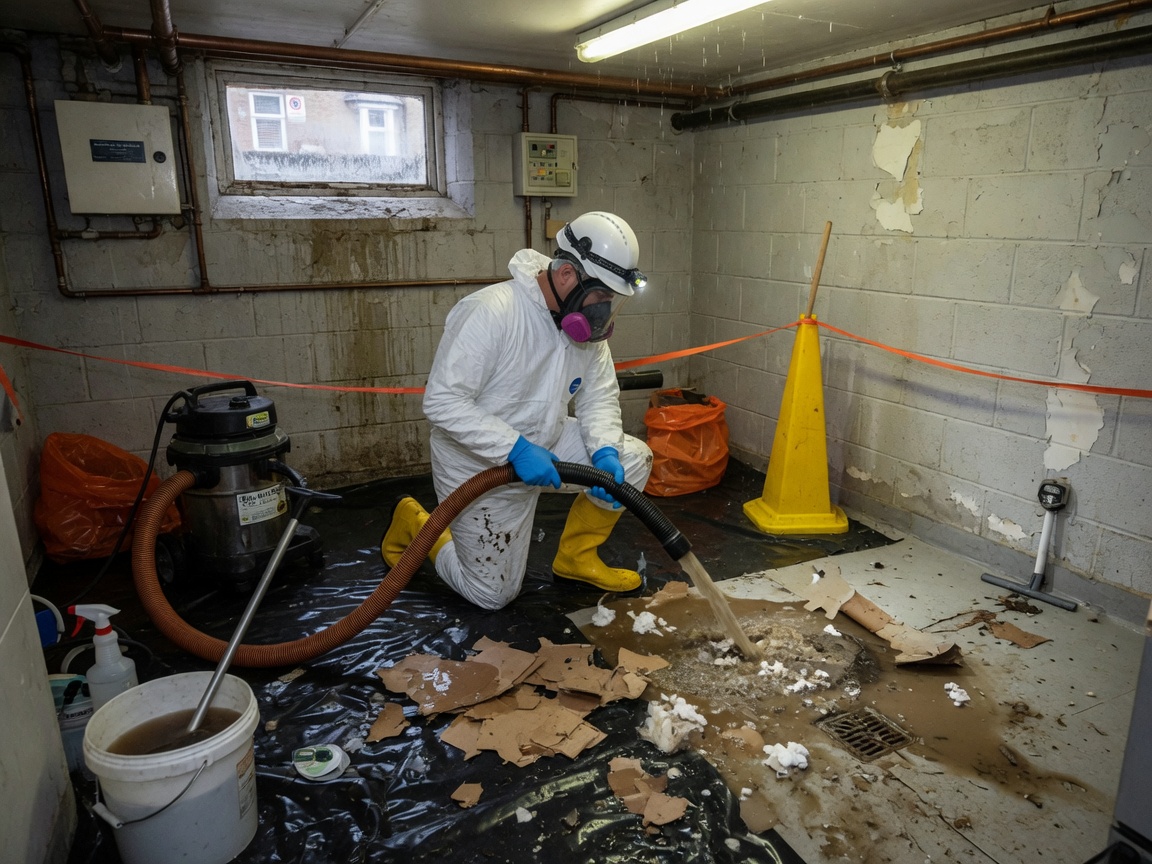
Brighton sits on clay-heavy soils that expand and contract with the semi-arid continental climate, putting extra stress on older cast-iron and clay sewer lines common in Downtown Brighton homes built before 1970. When summer temperatures spike, increased water use from irrigation and air-conditioning runoff can overwhelm these lines, pushing sewage back through floor drains or basement toilets. Technicians must first isolate the affected branch, then extract standing waste before it migrates into finished spaces near Brighton City Park or the Adams County Fairgrounds.
In Brighton Crossing subdivisions, many homes share laterals that run under driveways and sidewalks, so crews often need to coordinate with Adams County right-of-way permits before excavation. Hot, dry summers also dry out vent stacks, allowing negative pressure that pulls sewage farther into living areas than homeowners expect. Proper containment uses negative-air machines and antimicrobial fogging rated for porous materials like subfloor plywood, followed by moisture mapping to prevent hidden mold growth that thrives once monsoon moisture returns.
Nearby cities such as Thornton, Denver, and Commerce City share the same South Platte watershed influences, so backup events frequently trace to main-line surcharges rather than the individual property. Cleanup protocols here include documenting every removed item for insurance adjusters and leaving the site with temporary caps that allow continued use until full line repair. Homeowners in these neighborhoods learn quickly that skipping the extraction step leads to recurring odors that travel through shared wall cavities in townhomes.
Technician insight
In Brighton, the thing that catches most people out with Sewage Backup Cleanup is how quickly clay soils around Downtown Brighton and Brighton Crossing shift after a hot summer rain, letting sewage travel under finished floors before homeowners notice the odor. We see it every year when irrigation lines over-saturate the same trenches that hold 60-year-old clay pipe.
Brighton Crossing Backup After July Storm
A homeowner in Brighton Crossing noticed sewage rising in a basement utility sink after a sudden summer downpour. We traced the issue to a shared lateral blocked by roots that had exploited cracked clay pipe. Extraction and sanitizing of the utility room and adjacent storage prevented further migration into living space, and temporary caps allowed normal use until the county permit for repair was secured.
Sewage Backup Cleanup Services We Offer
✓Emergency Sewage Extraction
Rapid removal of standing wastewater from basements and crawl spaces using truck-mounted vacuums sized for Adams County clay-soil conditions.
✓Contaminated Flooring Removal
Safe cutting and disposal of saturated carpet, pad, and laminate in Brighton Crossing homes where sewage has wicked under baseboards.
✓Structural Drying and Dehumidification
Industrial air movers and dehumidifiers placed to pull moisture from older plaster walls common in Downtown Brighton properties after summer backups.
✓Antimicrobial Fogging Treatment
EPA-registered fog applied to joists and concrete after extraction to address bacteria left behind by backups near the Adams County Fairgrounds.
✓Contents Cleaning and Sanitizing
On-site cleaning of salvageable furniture and boxes for residents in Brighton Crossing whose storage areas were affected by line surcharges.
Sewage Backup Cleanup Cost in Brighton, CO
| Service | Typical Range | What Affects It |
|---|---|---|
| Standard basement extraction | $900–$1800 | Single room, no structural removal required |
| Full lower-level cleanup | $2200–$3800 | Multiple rooms plus flooring removal in older Downtown Brighton homes |
| Additional drying day | $250–$450 | Extended equipment rental after heavy summer saturation |
Ranges are typical for Brighton, CO and confirmed with an exact written quote before any work starts.
How it works
- 1
Site Assessment
Arrive within service hours, locate the backup source, and map affected rooms while noting proximity to shared laterals in Brighton neighborhoods.
- 2
Containment Setup
Install plastic barriers and negative air to keep odors and pathogens from reaching unaffected areas of the home.
- 3
Waste Extraction
Remove all standing sewage and solids, then flush lines to confirm flow toward the Adams County main.
- 4
Sanitizing And Drying
Apply treatments, set drying equipment, and document moisture levels before leaving the property secure.
Pricing
Upfront quotes given after on-site inspection; final cost depends on volume of waste and square footage affected.